
TPLO Surgery - Discharge Instructions
General Information
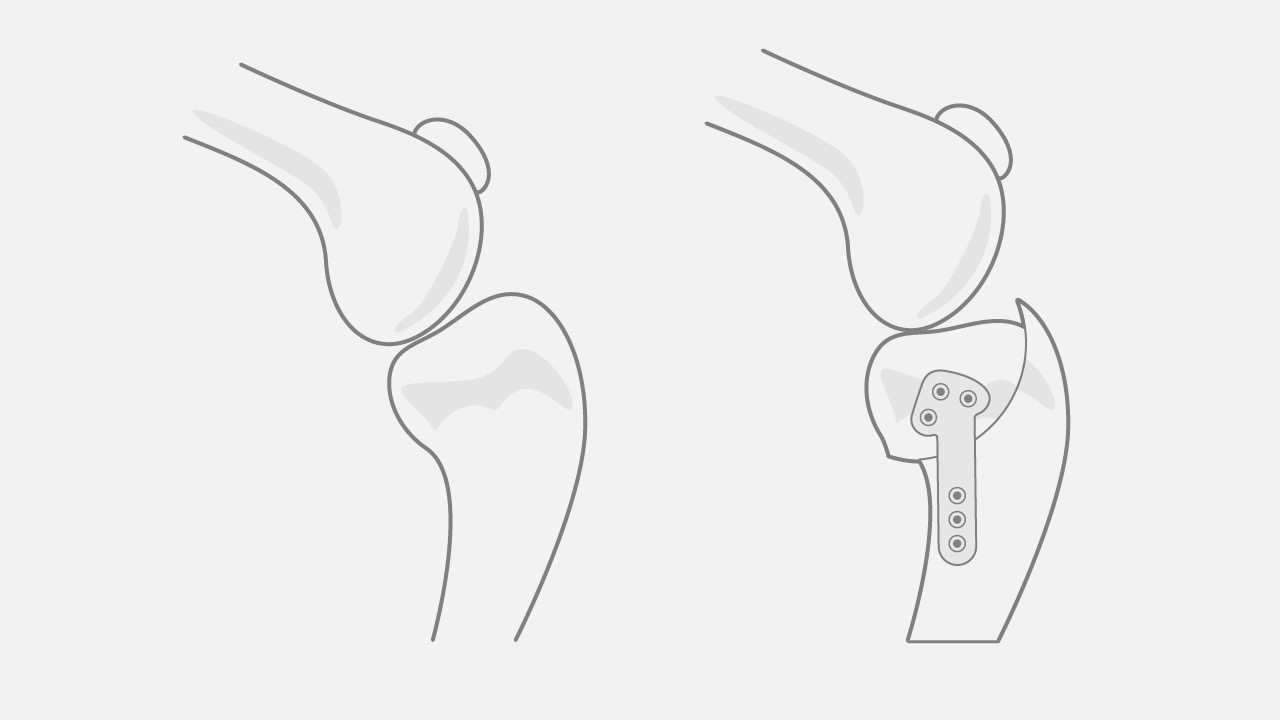
has undergone Tibial Plateau Leveling Osteotomy (TPLO) surgery to treat cranial cruciate ligament rupture. This procedure changes the biomechanics of the stifle (knee) by rotating the normally sloped tibial plateau to become flat, eliminating the tendency for the tibia (shinbone) to thrust forward during weight bearing. This prevents further meniscal (cartilage) damage and has improved success at avoiding long-term arthritis development compared to other cruciate repair techniques.
Recovery period is approximately 8-12 weeks, during which home care is extremely important to achieve the best outcomes.
ALERTNESS
has been given anesthesia today and may be drowsy, unsteady, quieter than normal, or temporarily more vocal or restless for up to 24 hours following the procedure. Mild nausea, decreased appetite, and delayed bowel movements may also occur after anesthesia. Please keep indoors in a quiet area and away from stairs, decks, or other areas where falls or injury could occur during recovery. Closely supervise interactions with children and other pets until fully recovered.
BANDAGE care
A bandage has been placed on to help protect the incision and surgical site during healing. The bandage helps reduce swelling, protect the area, and improve comfort during recovery.
- The bandage should generally be rechecked for removal in 3 days unless otherwise directed by your vet. At that time, the vet will determine if another bandage is needed or if it can be removed entirely.
- Keep the bandage clean and dry at all times. If goes outside during wet weather, place a plastic bag or protective covering over the bandage temporarily. Remove the covering immediately once back indoors to prevent moisture buildup. If the bandage becomes wet, dirty, develops an odor, slips out of place, or appears damaged, please contact our office as soon as possible for evaluation and replacement.
- Check the toes or area below the bandage daily for swelling, redness, discharge, odor, coldness, pain, or irritation. Swelling above or below the bandage may indicate impaired circulation from a bandage that is too tight. If the bandage slips below the incision or appears to be too tight, remove the bandage and contact our office or seek veterinary care immediately.
- Prevent licking, chewing, or scratching at the bandage. An Elizabethan collar (cone or “e-collar”) is often recommended during healing. Other options to use in conjunction with the cone that may help discourage chewing include covering the bandage with a sock, using bitter deterrent sprays, and/or using prescribed calming medication if needed.
- If the bandage slips below the incision, seems loose, or becomes wet or soiled before the scheduled recheck, you may carefully remove it one layer at a time using caution to avoid cutting the skin. If you are uncomfortable removing the bandage at home, please contact us for assistance.
Please note: There is no additional cost for a bandage change or removal. However, a technician appointment is required.
INCISION
Check the incision daily for redness, swelling, discharge, bleeding, gaps in the incision, or signs of discomfort. Mild bruising, slight redness along the incision edges, and mild swelling or thickening near the incision can be normal during healing and often improve within 5-7 days.
Please keep the incision clean and dry and do not allow to lick, chew, or scratch at the surgical site. Do not allow bathing, swimming, or soaking of the incision until fully healed.
Because this procedure involves healing bones, muscles, and soft tissues, it is especially important to follow all activity restriction instructions during recovery to help prevent strain on the surgical repair and incision site.
If the incision comes open after hours, minor skin separation can often wait until regular business hours to be evaluated. However, significant bleeding, exposed tissue/bone, or tissue protruding from the incision should be treated as an emergency.
will need to wear an Elizabethan collar (cone or “e-collar”) until the incision is fully healed, which is typically 14 days following surgery. Damage to the incision may result in delayed healing, infection, additional surgery, complications, and additional medical costs.
ICE AND REST
Cold therapy can help reduce swelling, inflammation, and discomfort following surgery. Once the bandage has been removed in 3 days, you may apply an ice pack or cold compress to the surgical area for approximately 5 minutes at a time, up to 4 times daily, during the first 3-5 days following surgery or until swelling has improved. Always place a thin towel or cloth between the ice pack and ’s skin to help prevent irritation or cold injury.
SUTURES / STAPLES:
Some sutures are absorbable and will dissolve on their own during the healing process. Any visible external sutures or staples will need to be removed 14 days following surgery unless otherwise directed by your vet. Please contact our office at 801-269-1213 to schedule a suture or staple removal appointment. **There is no charge for a suture or staple removal appointment if no additional examination or treatment is needed at that visit.
IV CATHETER
had an IV catheter placed for the procedure today. It is common for some mild bruising or tenderness at the site and should resolve quickly. If leaves the clinic with a small bandage on their leg, please REMOVE IT ONE HOUR AFTER ARRIVING HOME. It is important that this bandage is removed the same evening to help prevent swelling, irritation, or damage to the limb. Please note that your pet may have multiple shaved areas from IV catheter placement, blood draws, monitoring equipment, injections, or other treatments performed during their procedure.
FOOD AND WATER
Many pets may experience nausea for the first 24 hours following a surgical procedure. Once ’s coordination has returned to normal, it is okay to offer a small amount of food and water. If vomiting occurs after eating or drinking, withhold food and water until the following morning. Please contact our office if vomiting persists beyond 24 hours after surgery or if your pet’s appetite does not return.
Medications
has been prescribed medications to help manage pain, inflammation, comfort, and recovery following surgery. Some medications may have also been given by injection during and after the procedure. If is not vomiting, it is okay to begin the prescribed medications the first night following surgery. If appears nauseous or vomits, wait until the following morning before starting oral medications unless otherwise directed by your vet. Please administer all medications exactly as directed and follow only the instructions printed on the prescription labels.
RECHECK APPOINTMENT
Follow-up appointments and progress x-rays are important to help monitor healing during recovery. TPLO patients typically need x-rays approximately 8 weeks following surgery, and some pets may require additional rechecks or x-rays around 12 weeks depending on healing progress. Please contact our office if recovery seems delayed, becomes more painful, stops using the leg, or if you have any concerns during the recovery period. Please note: Additional fees may apply for follow-up examinations, recheck appointments, x-rays, medications, bandage changes, or additional treatments during recovery.
RECOVERY OVER THE NEXT 12 WEEKS
Recovery should progress slowly and comfortably for . If you are ever unsure, it is safest to do less activity rather than too much too soon. Mild soreness after exercise can be normal, but worsening limping, increased pain, swelling, or refusal to use the leg should be reported to your veterinarian.
Wait until staples or sutures are removed (approximately 2 weeks following surgery) before beginning the full physical therapy program unless otherwise directed by your vet.
WEEKS 1
- Some grogginess, whining, restlessness, or mild anxiety can be normal during the first several days following surgery and may be related to discomfort or medications. Please contact our office if additional pain control or medication adjustments may be needed.
- Short walks on a leash to go potty & plenty of downtime in a kennel, crate, or small room.
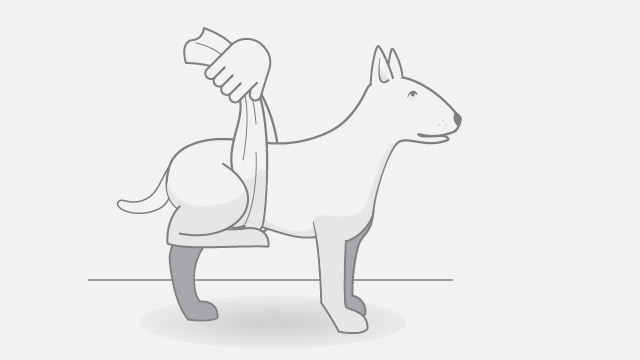
- Use a sling to support them outside for the first seven days.
- Reduce the amount of food given by 30% to avoid weight gain.
- No off-leash activity. No jumping on or off furniture (including beds and couch).
- No playing. No ball chases. No running. No jumping in or out of the car.
WEEK 2
- Controlled leash walks.
- Walks must be performed on a short leash. Walking your dog slowly at first will help him/her gradually improve his strength. Walking slowly will also help them use the operated leg more confidently.
- One walk per day for five minutes at a time is recommended. This walk is in addition to walks for elimination purposes.
- Physical therapy/rehabilitation at home
- Passive Range of Motion (ROM)
• Gently flex and extend the hip, knee, and hock 10-15 times, 2-3 times daily.
• Movements should be slow and comfortable.
• Stop if your pet resists or appears painful. - Massage
• Gentle massage of the thigh muscles for 5-10 minutes, 2-3 times daily.
- Passive Range of Motion (ROM)
- No off-leash activity. No jumping on or off furniture (including beds and couch).
- No playing. No ball chases. No running. No jumping in or out of the car.
- Suture recheck appointment.
WEEK 3 and 4
- Increase leash walks to about 10 minutes three times a day.
- For pets that seem sore after 10-minute walks, reduce it to 5 minutes for 2-3 days, then gradually increase it over the following 4-5 days to 10 minutes.
- Continue physical therapy/rehabilitation at home.
- Continue:
• ROM exercises
• Massage - Add Weight-Shifting Exercises
• While standing, gently encourage your pet to shift weight onto the operated leg.
• Hold for a few seconds and repeat several times.
- Continue:
- No off-leash activity. No jumping on or off furniture (including beds and couches).
- No playing. No ballchases. No running. No jumping in or out of the car.
WEEK 5 through 8
- Continue rehabilitation/physical therapy at home.
- Continue:
• Leash walking progression
• Sit-to-Stand Exercises (10 repetitions, 2-3 times daily)
• Weight shifting
• Massage as needed - Add: Figure-8 Walking
• Slowly walk your pet in large figure-8 patterns.
• Helps improve balance, coordination, and strength.
- Continue:
- No off-leash activity. No jumping on or off furniture (including beds and couches).
- No playing. No ball chases. No running. No jumping in or out of the car.
- Week 5: Increase the length of walks to 12 minutes 3-4 times per day.
- Week 6: Increase the length of walks to 15 minutes 3-5 times per day.
- Week 7: Increase the length of walks to 18 minutes 3-5 times per day.
- Week 8: Increase the length of walks to 20 minutes 3-5 times per day.
WEEKS 9-11
- Recheck radiographs appointment.
- Radiographs will be taken at week 8 to confirm appropriate bone healing. If the surgery site is healing appropriately, activity restrictions are slowly lifted.
- Continue physical therapy/rehabilitation.
- Continue:
• Sit-to-stands
• Figure-8s
• Controlled leash walks - Add:
• Hill walking
• Cavaletti poles (if available)
• Controlled off-leash activity as directed
- Continue:
- Continue to increase the duration of the walks gradually.
- Gradually introduce the off-leash activity. Avoid activities requiring sudden changes in speed and direction (ball chasing, fetch etc.)
- Week 9: 5 minutes of off-leash activity 3-5 times a day.
- Week 10: 5-10 minutes of off-leash exercise 3-5 times a day.
- Week 11: 10-15 minutes of off-leash exercise 3-5 times a day.
If develops worsening limping, discomfort, or soreness with increased activity or exercises, return to the previous week’s activity level until comfortable again.
WEEK 12 AND BEYOND
- All restrictions are lifted. Continue to increase off-leash activity to pre-surgery level gradually. Although the bone may have healed, there is still plenty of time needed to rebuild the muscles supporting the knee. On average, it takes six months before your dog’s operated leg will rebuild the pre-surgery muscle mass.
Prognosis
While pets that undergo TPLO surgery may still be prone to arthritis and other joint issues, the procedure significantly enhances their ability to lead a healthy and active lifestyle. Recent studies indicate that approximately 93% of pets can return to full normal function within a year after surgery. However, it is important to note that about 50% of dogs with a ruptured cranial cruciate ligament may experience a rupture in the other leg within 2 years.
| Successful long-term recovery relies on ongoing management strategies: | |
| Weight Management | Maintaining a healthy weight is crucial. Feeding a commercial diet high in Omega-3 fatty acids can help reduce inflammation. |
| Physical Rehabilitation | Rehabilitation can assist in restoring normal mobility and function. |
| Adjunctive Therapies | Pain relief during the initial recovery phase can enhance rehabilitation efforts. |
Physiotherapy / Rehabilitation
Professional rehabilitation therapy is strongly recommended following orthopedic surgery or injury recovery. Benefits of rehabilitation include:
• A treatment plan tailored to your pet's specific condition, age, size, and activity level
• Consideration of your pet's lifestyle and your family's needs
• Passive range-of-motion exercises to help maintain joint flexibility and mobility
• Therapeutic swimming or underwater treadmill therapy to support recovery after incision healing and suture removal
• Balance and proprioception exercises to improve coordination and function
• Controlled walking programs designed to gradually rebuild strength and endurance
| Alta Dog Rehabilitation | 7107 S 400 W, Suite #8 Midvale, UT 84047 | (385) 226-5971 |
| Utah Pet Rehab & Acupuncture Center, LLC | 2896 E 3300 S Salt Lake City, UT 84109 | (435) 640-5451 |
| Salt Lake Animal Physical Therapy LLC | 349 E 900 S Salt Lake City, UT 84111 | (385) 354-7272 |
| K-9 Rehab Center | 698 W 500 S West Bountiful, UT 84087 | (801) 294-5960 |
Please contact the rehabilitation facility directly for current services, pricing, and appointment availability.
Emergency services
Emergency services are available after hours at the following locations. You are responsible for any fees charged by other clinics.
| MedVet Salt Lake City | 331 W Bearcat Dr Salt Lake City, UT 84115 | (385) 341-4444 |
| Advanced Veterinary Care | 1021 E 3300 S Salt Lake City, UT 84106 | (801) 515-2023 |
| Cottonwood Animal Hospital | 6360 S Highland Dr Murray, UT 84121 | (801) 278-0505 |
| Mountain West Veterinary Specialists – Bluffdale | 13860 S 2700 W Bluffdale, UT 84065 | (801) 515-5011 |
| Mountain West Veterinary Specialists – Layton | 908 N Main St Layton, UT 84041 | (801) 683-6201 |
Owners are responsible for following all post-operative instructions and medication directions provided at discharge. Failure to follow these instructions may result in complications or delayed healing. Any additional medical, surgical, or emergency care required after discharge, including treatment related to post-operative complications, will remain the financial responsibility of the owner.